
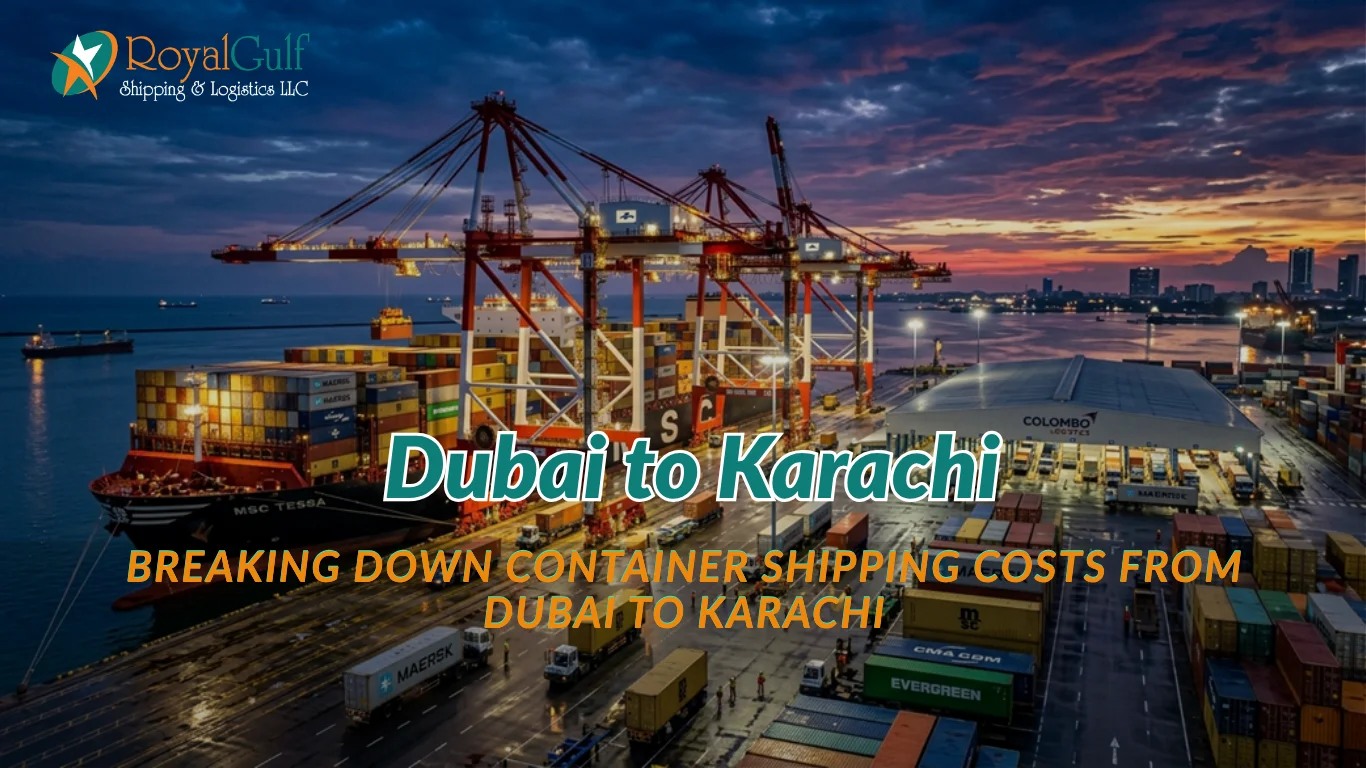
Transshipment via Colombo connects major East to West ocean trunk routes with the Arabian Gulf, Indian Subcontinent, and East Africa without deviating from global sea highways. Situated just 10 nautical miles off the main Indian Ocean trade route, the Port of Colombo operates deep water berths up to 20 meters draft capable of handling 24,000 TEU ultra large container vessels. Importers and freight forwarders leverage Colombo transshipment services to achieve rapid feeder turnarounds, slash ocean freight costs by 20% to 35% over direct loops, bypass draft limitations in regional ports, and utilize bonded CFS facilities for cargo cross stuffing and Switch B/L origin protection.
Why Colombo Dominates Indian Ocean Freight
If you manage international ocean freight across the Indian Ocean and Middle Eastern trade corridors, you encounter a fundamental physical constraint: mega container ships simply cannot enter shallow regional draft ports. Harbor physics present an unyielding reality. A 20,000+ TEU vessel drawing 16 meters of water will run aground attempting to call regional harbors like Chittagong, Kolkata, or Tuticorin, where drafts remain limited to 9 to 11 meters.
As a result, containerized cargo moving between East Asia, Europe, South Asia, and the Middle East must transfer between ocean vessels. While regional cargo historically passed through transshipment hubs like Singapore or Jebel Ali, the Port of Colombo (managed under the SriLanka Ports Authority) has emerged as South Asia’s undisputed transshipment powerhouse.
Over 80% of Colombo’s total annual container volume (exceeding 7.2 million TEUs) represents international transshipment cargo. The port’s primary competitive advantage lies in its geographic position: sitting a mere 10 nautical miles (a 45 minute deviation) off the main East to West nautical motorway. Diverting an ultra large container ship to other hubs can burn two full days at sea and tens of thousands of dollars in fuel. Colombo delivers maximum network efficiency with minimal bunker burn.
Port of Colombo Terminal Infrastructure & Capability
The Port of Colombo houses four distinct terminal complexes, each tailored to specific vessel sizes, ocean carrier alliances, and feeder networks:
- CICT (Colombo International Container Terminal): Featuring an 18 meter depth, CICT (operated by China Merchants Port Holdings) is South Asia’s flagship terminal built to handle 24,000 TEU megamax vessels on 2M and Ocean Alliance mainline East to West loops.
- CWIT (Colombo West International Terminal): Developed through a major joint venture between India’s Adani Ports and Sri Lanka’s John Keells Holdings, CWIT offers a 20 meter draft designed specifically for next generation ultra large container ships.
- SAGT (South Asia Gateway Terminals): Operating with a 15 meter draft, SAGT is renowned for industry leading crane productivity and rapid berth turnaround, acting as a crucial inter terminal workhorse for feeder connections into India and the Gulf.
- JCT (Jaya Container Terminal): State operated terminal by the SLPA, specializing in regional common feeder shuttles, coastal relays, and specialized project cargo transfers.
Major Shipping Routes & Trade Corridors via Colombo
Selecting the optimal transshipment corridor via Colombo significantly reduces transit times and transportation overhead across four main trade lanes:
Trade Corridor | Key Origin & Destination Ports | Transit Time Frame | Primary Strategic Advantage |
Far East to Arabian Gulf | Shanghai / Ningbo / Singapore to Colombo to Jebel Ali / Dammam / Doha | 14 to 18 Days Total | Bypasses multi port destination delays; steady 4 to 6 day feeder sprint to UAE/Gulf ports. |
Far East to Pakistan | East Asia Main Ports to Colombo to Karachi (KICT/SAGT) / Port Qasim | 12 to 15 Days Total | Avoids premium direct mainline ocean tariffs while guaranteeing 3 to 4 day shuttle reliability. |
Indian Feeder Network | Nhava Sheva / Mundra / Chennai / Visakhapatnam to Colombo Hub | 2 to 4 Days Relay | Acts as India’s premier offshore relay, bypassing domestic highway bottlenecks. |
Bangladesh to Europe / US | Chittagong Feeder to Colombo to Rotterdam / Hamburg / New York | 18 to 24 Days Total | Allows garment exporters to move feeder boxes onto deep water European/Transpacific liners. |
Commercial & Operational Advantages for Global Shippers
Experienced logistics desks at Royal Gulf Shipping & Logistics LLC actively recommend transshipment via Colombo over rigid direct bills of lading due to four major operational levers:
Lower Unit Slot Economics (20% to 35% Freight Savings)
Moving cargo on 20,000+ TEU megamax vessels dramatically slashes per TEU slot operational costs compared to smaller regional container ships. Even after accounting for terminal handling charges (THC) in Colombo, net landed freight bills typically drop by 20% to 35%.
Total Demurrage & Detention Elimination via Bonded CFS
When destination ports face severe congestion or document clearance stalls, carrier free time expires rapidly, costing importers $150 to $250 per day per container. By utilizing Colombo’s bonded Container Freight Stations (CFS), cargo can be de stuffed from carrier owned equipment and reloaded into Shipper Owned Containers (SOC) or feeder boxes, resetting carrier detention clocks to zero.
Supplier Protection & Origin Confidentiality (Switch B/L)
Under Sri Lanka’s Commercial Hub Regulation No. 1 of 2013 (Finance Act), goods stored in Colombo bonded free zones operate under a 100% duty free and VAT exempt regime. International traders can legally surrender the factory’s original Bill of Lading and issue a Switch Bill of Lading via Colombo, keeping factory identities and commercial markup margins strictly confidential before destination delivery.
Mid-Voyage Quality Control & Inspection
Transshipment provides a unique operational pause halfway through transit. Certified marine surveyors can de stuff containers in Colombo, conduct physical piece counts, inspect for sweat or crushed cartons, take photographic logs, and apply fresh dunnage or strapping before onward feeder sailing.
The Complete Step by Step Colombo Transshipment Process
Executing a seamless transshipment move requires structured coordination between ocean carriers, terminal operators, customs officials, and freight forwarders. Under international standards aligned with the International Maritime Organization IMO, the process follows six structured stages:
Stage 1: Pre-Arrival Manifesting & Transit Filing
Prior to vessel arrival, inbound manifest details are electronically submitted to Sri Lanka Customs and SLPA under transshipment bond status.
Stage 2: Vessel Discharge & Deep-Water Docking
The mother vessel berths at CICT, SAGT, or CWIT; high-efficiency gantry cranes discharge containerized units directly onto terminal yards.
Stage 3: Bonded Yard Stacking or CFS Transfer
Containers are transferred within bonded port perimeters to designated transshipment yards or moved to bonded CFS stations for value-added handling.
Stage 4: Cross-Stuffing & Value-Added Services (Optional)
If requested, factory seals are cut under customs supervision. Cargo is inspected, palletized, shrink-wrapped, or re-stuffed into fresh equipment.
Stage 5: Outbound Manifesting & Switch B/L Issuance
Onward manifest data is cleared, and second-set Switch Bills of Lading are generated to update shipper details and destination instructions.
Stage 6: Feeder Loading & Onward Delivery
Containers are loaded onto high-frequency connecting feeder vessels for rapid final-leg delivery to Jebel Ali, Karachi, Dammam, or regional ports.
Operational Risk Matrix: Cost & Transit Time Drivers
Navigating global supply chains requires proactive management of operational variables that influence total landed cost and schedule integrity:
Operational Factor | Cost Impact | Transit Time & Schedule Impact |
Port & Berth Congestion | Potential yard demurrage or temporary holding fees | Extended vessel waiting time at anchorage (1 to 3 days) |
Feeder Connection Windows | Rebooking fees for missed feeder connections | Sailing delays of 2 to 5 days awaiting next feeder loop |
Customs & Documentation Errors | Administrative amendment fees and re-filing costs | Hold on container release until manifest corrections clear |
Peak Shipping Seasons | General Rate Increases (GRI) and peak season surcharges | Tighter vessel capacity and potential rollover risk |
Special Cargo Handling (Reefer/Haz) | Reefer plug-in fees and dangerous goods monitoring | Mandatory extra inspection clearance windows |
Monsoon Weather Disruptions | Additional operational safety and vessel maneuvering fees | Intermittent crane stoppages during heavy sea squalls |
Why Partner with Royal Gulf Shipping & Logistics LLC?
Headquartered in Dubai, UAE, Royal Gulf Shipping & Logistics LLC (RGSL) serves as a premier freight forwarding and maritime logistics partner across the Middle East, South Asia, and global trade lanes. Our specialized Colombo transshipment desk provides full operational oversight, including:
- Direct carrier agreements with mainline loops and feeder operators across CICT, SAGT, and CWIT terminals.
- Dedicated bonded CFS cross stuffing solutions to eliminate carrier demurrage and detention charges.
- Legal Switch Bill of Lading execution for trade secret protection and origin masking.
- 24/7 real time container tracking, milestone monitoring, and rapid customs documentation clearance.